
VMC Club
The VMC Club meets on the third Thursday of every month from 6-8 PM at ACI Jet.
September and October, 2026
We covered local accidents and accidents involving local pilots. In September we covered density altitude, fuel exhaustion, and accidents in the pattern. We didn’t make it all the way through the notes so we finished up in October with carb icing and inadvertent cloud entry on takeoff at night. Presentation
October 12, 2026
We did a VMC-type presentation at the EAA meeting this month and I though it might be something the VMC Club might enjoy.
August 20, 2026
We’ll did the ground school required for you Flight Review. This PDF will cover the required parts of the BFR. Rod Machodo’s video is worth watching. Even though it wasn’t planned to be part of the meeting, we talked a bit about Basic Med. Right now you can fly with Basic Med in United States (including territories e.g Puerto Rico and the Virgin Islands, Mexico, The Bahamas, and The Dominican Republic. You cannot fly with Basic Med in Canada. AOPA has details of the process and the privileges under Basic Med.
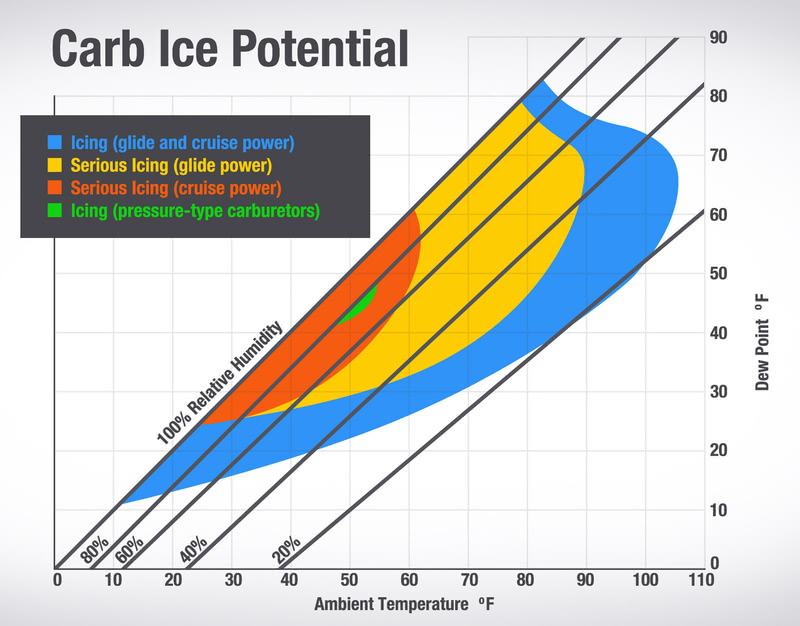
In the second part of the meeting we were going to cover a bunch of topics including Carb Ice. Notes are here. We never made it that far so we’ll do that on subsequent meetings.The FAA has a document Breaking the Ice about carburetor icing and notes that it generally occurs between 40 and 80 degrees F but may occur at even higher temperatures whenever the relative humidity is more than 50%. But as you can see in the chart below, it is almost always a risk.
July 16, 2026
We talked about local accidents and how to avoid them. Some takeaways are:
- Situational awareness applies even while taxiing.
- Know your airplane’s systems.
- Don’t rush. Use your checklists all the time.
- Weather can be a feind, not a friend.
May 21, 2026
There was some confusion about displaced/relocated thresholds at the last meeting so we quickly covered that and the incident at Newark related to their displaced threshold.
Scott mentioned the 5 Ps of Single Pilot Resource Management in the IFR Club meeting. It turns out that they can be useful for preflight and enroute so we talked about them at the meeting. PDF
When discussing sources of weather information Dana and Lauren mentioned that they have called up Flight Service at 1-800-WX-BRIEF to get the briefer’s opinion on the flight. Lauren postponed her flight because the briefing indicated that it would have unpleasant turbulence.
As part of the presentation we talked about the Normalization of Deviance. Juan Brown had two examples from recent crashes one on Catalina Island CA, and one in Marana AZ.
April 16, 2026
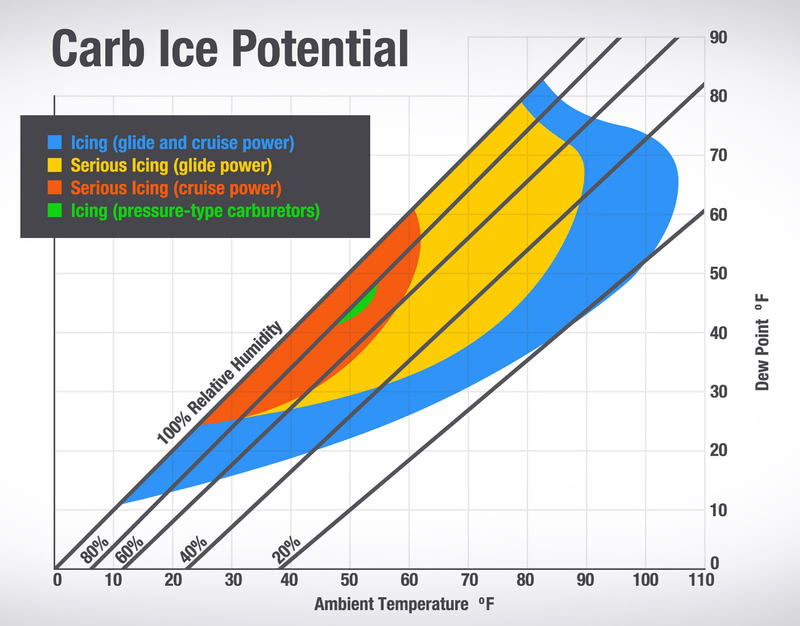
We talked about the potential for carb ice and several pilots experienced it. Some resolved it with application of carb heat and others made a precautionary landing. Carb icing is usually not an issue with Lycoming engines but is often something to be aware of with Continental engines that are found in Cessna 152s and 172s. Check your owner’s manual to see if you should use carb heat when operating at low RPM (e.g. on the descent to landing) or for takeoff.
We also had a discussion of the crash at Hollister Airport and played a snippet of a Juan Brown video of the accident. Below is the full version of Juan’s video. There seem to be two issues. One seems to be that one airplane was not communicating on the CTAF. The other issue is that an airplane was taking off on the taxiway leading up to the runway. I looked up the runway markings in the AIM and provide some details below about their meaning.
The NTSB has issued a Final Report on the crash and conclulded that the accident was the result of “The departing pilot’s failure to see and avoid the landing airplane during the takeoff, which resulted in a mid-air collision.”.
Section 3. Airport Marking Aids and Signs
2−3−3. Runway Markings
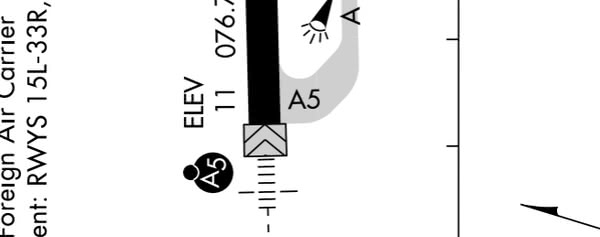
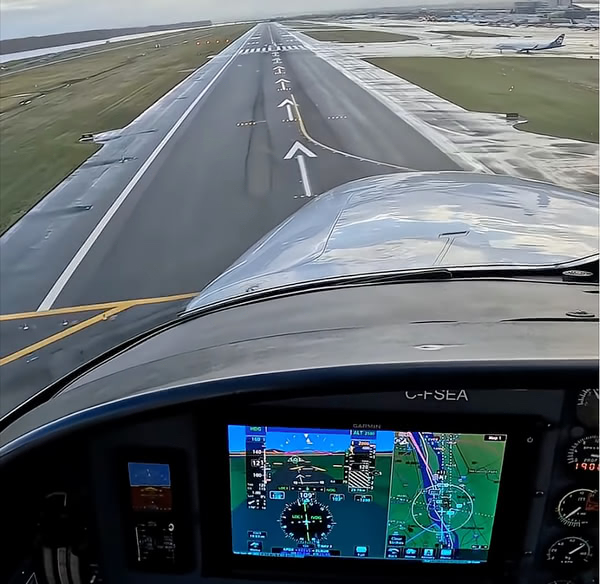
2. Displaced Threshold. A displaced threshold is a threshold located at a point on the runway other than the designated beginning of the runway. Displacement of a threshold reduces the length of runway available for landings. The portion of runway behind a displaced threshold is available for takeoffs in either direction and landings from the opposite direction. A ten feet wide white threshold bar is located across the width of the runway at the displaced threshold. White arrows are located along the centerline in the area between the beginning of the runway and displaced threshold. White arrow heads are located across the width of the runway just prior to the threshold bar, as shown in FIG 2−3−4.
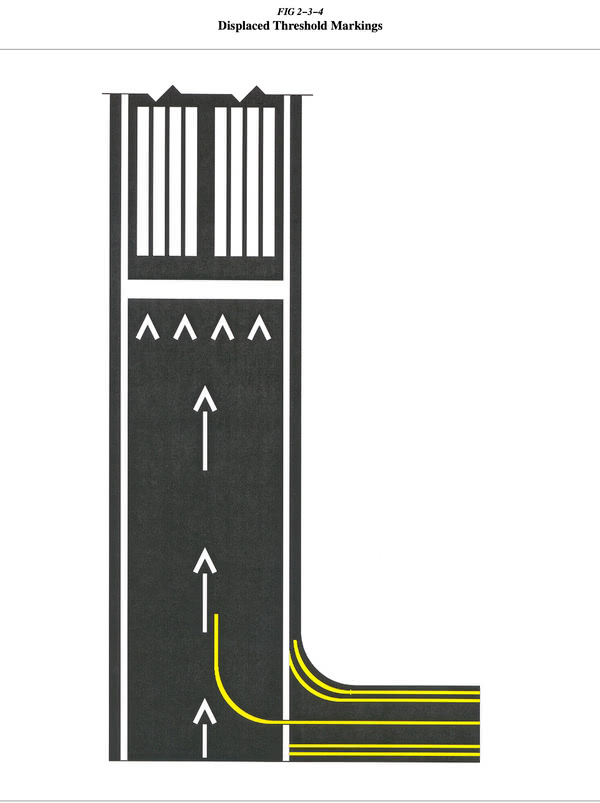
NOTE− Airport operator. When reporting the relocation or displacement of a threshold, the airport operator should avoid language which confuses the two.
i. Demarcation Bar. A demarcation bar delineates a runway with a displaced threshold from a blast pad,
stopway, or taxiway that precedes the runway. A demarcation bar is 3 feet (1m) wide and yellow, since it is not
located on the runway, as shown in FIG 2−3−6.
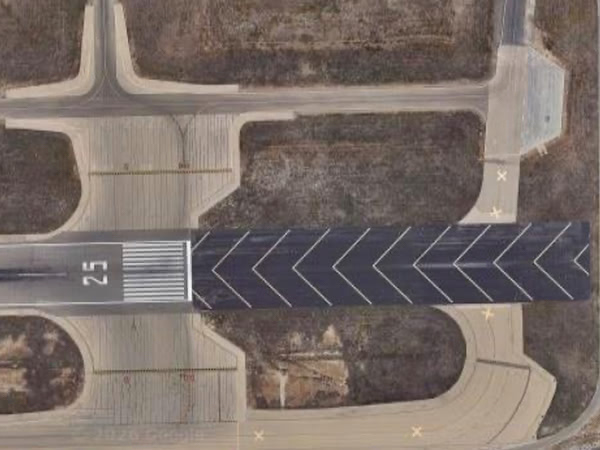
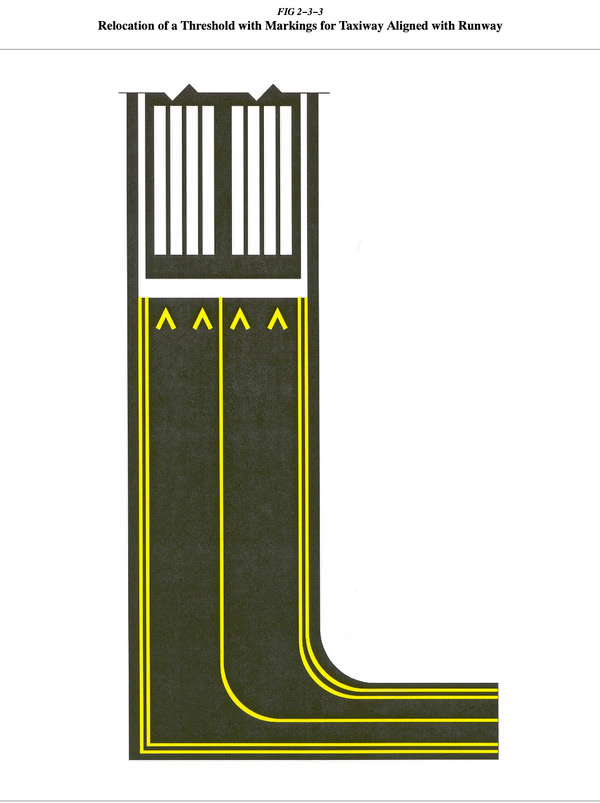
1. Chevrons. These markings are used to show pavement areas aligned with the runway that are unusable
for landing, takeoff, and taxiing. Chevrons are yellow. (See FIG 2−3−7.)
[An example of this is Santa Barbara (KSBA). The chevrons indicate that this area is not available for takeoff or landing. In this case the taxiway is also marked with Xs because the don’t want you to even think about taking off from there.]
j. Runway Threshold Bar. A threshold bar delineates the beginning of the runway that is available for landing when the threshold has been relocated or displaced. A threshold bar is 10 feet (3m) in width and extends across the width of the runway, as shown in FIG 2−3−4.
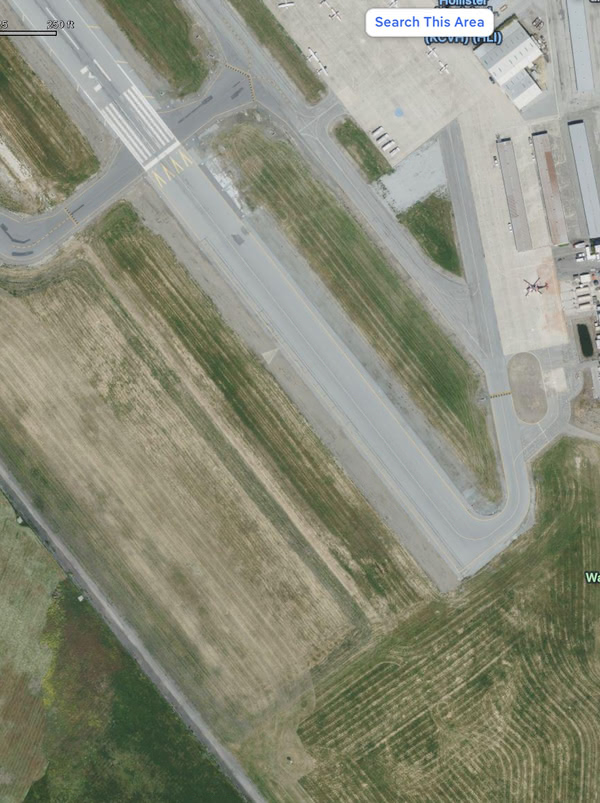
Lead up to the runway is a taxiway.
The runway at Hollister (KCVH) does not have the displaced threshold markings. The lead up to the runway is therefore a taxiway. Takeoffs are not permitted on this portion even thought it might appear to be part of the runway.
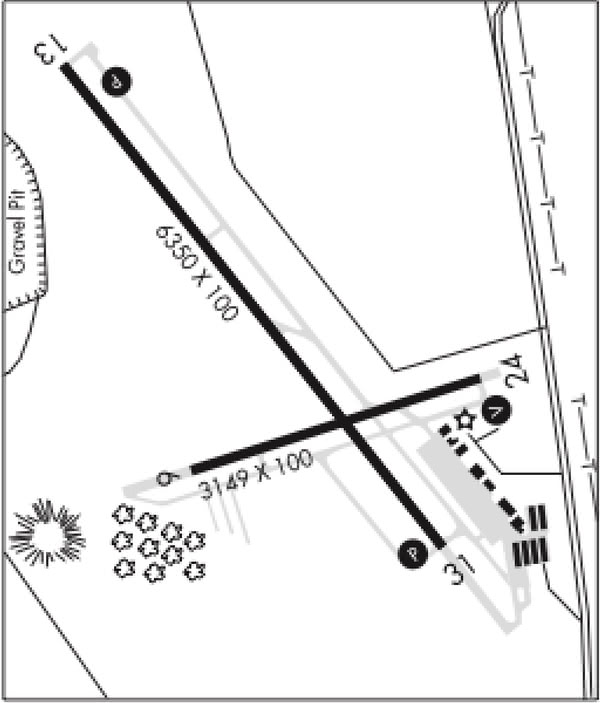
The Chart Supplement does not show the figure 8 symbol at the runway end that would indicate that this is a displaced threshold. The airport diagram at KSBP is an example of a displaced threshold with the figure 8.
I ran across a video of plane landing in Portland Oregon that shows what a displaced threshold looks like from the cockpit.
The crash of United airplane with a bread truck on May 3rd was due to the airliner dipping below the 3° visual glidepath that would have taken it to 60' over the displaced runway threshold.
Following the PAPI should assure that there are no obstructions in the glidepath. Source
The NTSB Report is out and Juan Brown has the details.
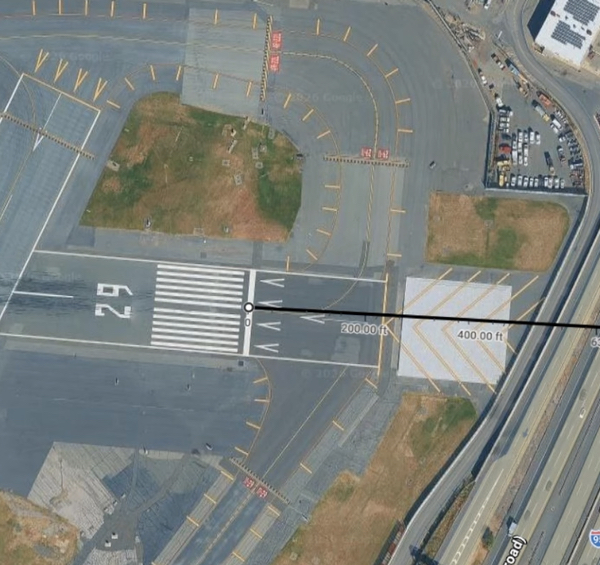
The threshold should be located at the beginning of the full-strength runway pavement or runway surface. However, displacement of the threshold may be required when an object that obstructs the airspace required for landing and/or departing airplanes is beyond the airport owner's power to remove, relocate, or lower. Thresholds may also be displaced for environmental considerations, such as noise abatement, …
I’m pretty sure that’s the reason for the displaced threshold on Rwy 29—clearance over Buckley and 227 intersection when they lengthened the runway a while ago.